
January 24, 1984 Retired 2002 Still smiling
Happy Mac
The first computer that smiled back.
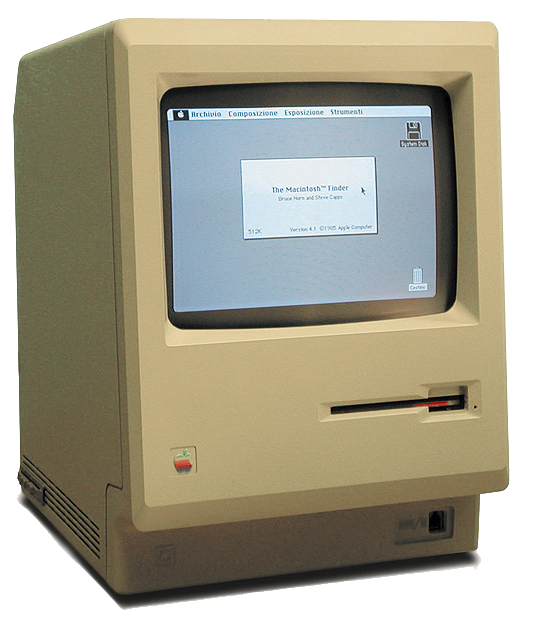
Before the logo. Before the chime everyone can hum. A compact Macintosh passed its diagnostics, painted a grin on a 512×342 screen, and told you the machine was a friend.
The introduction
A gray screen.
Then a smile.
On January 24, 1984, Apple introduced the Macintosh 128K at the Flint Center in Cupertino. Two days earlier, Ridley Scott’s 1984 commercial had aired once, in the third quarter of the Super Bowl. The machine that followed that ad did something no personal computer had bothered to do.
It greeted you.
After the square-wave beep and a handful of ROM diagnostics, the screen went the exact gray of a desktop waiting to exist. If the hardware was sound, a tiny smiling computer appeared — the Happy Mac. If it was not, you met the Sad Mac and a hex code. The face was the POST result, written in a language anyone could read.
The designer
Graph paper, $2.50.
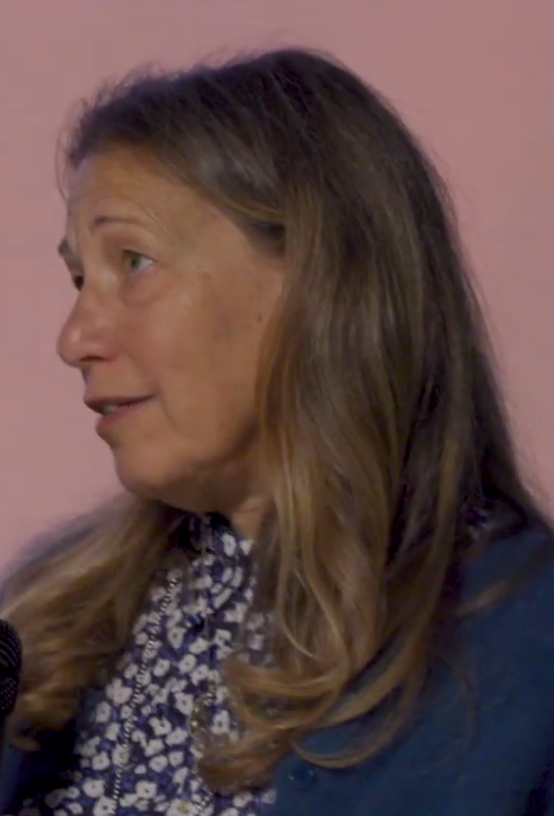
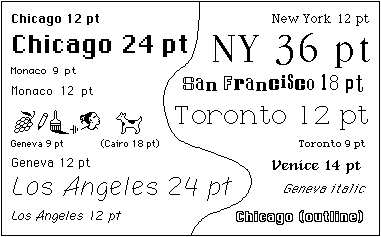
Kare joined the Macintosh team in January 1983 with a PhD on caricature in sculpture and no computer-industry résumé. Andy Hertzfeld handed her a grid. She treated each icon like needlepoint: one thousand twenty-four squares, black or white, no almost.
“A smile just seemed like a good way to infuse a positive spin on the icon of the computer.”
She was countering what Steven Levy called the FUD principle — fear, uncertainty, and doubt. A smiling Macintosh said: you did not break it. Wait. Something good is coming.
-
 The bomb
-
 Command ⌘
-
Happy Mac
The picture
The last official face.
This is the Happy Mac from Mac OS X 10.1 Puma — the last version that booted to it. Hover a part. The computer is still the face: lilac screen, hooked nose, floppy slot, the two lamps on the chin.
Move across the face
The whole machine
Kare’s 1984 face — two eyes, a hooked nose, a smile — sitting in the later platinum chassis. Lauralee Alben’s 1990s color pass gave it the lilac screen. This drawing is the Puma-era look people still mean when they say Happy Mac.
The years it lived
Eighteen years on the boot.
-
Drawn before the machine shipped
Kare designs the Macintosh visual language in Cupertino. The Happy Mac is ready before January’s launch — a face waiting for hardware that can wear it.
-
Macintosh 128K
January 24. Steve Jobs pulls a computer from a bag. At home, owners hear Andy Hertzfeld’s 600 Hz square-wave beep, then meet the smile. On machines without a hard disk, a floppy with a blinking question mark means: insert the System.

Old World ROM: the machine is fine, the disk is missing. Reconstruction of the 32×32 boot icon. -
Sad Mac learns to sing
After the Macintosh II, a failed POST can play the Chimes of Death under the frowning face and a hex dump. The Happy Mac stays 1-bit, unchanged, while the rest of the system grows color around it.
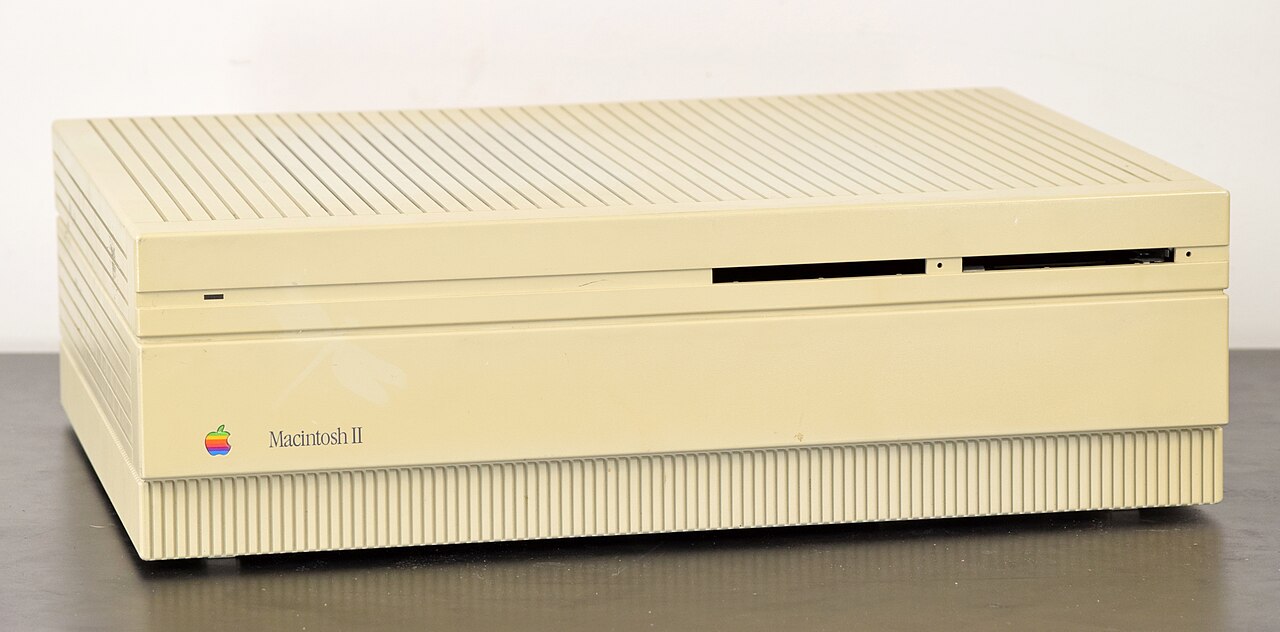
Macintosh II, 1987. The first Mac that could play the Chimes of Death. Photo: Akbkuku, CC BY 4.0. 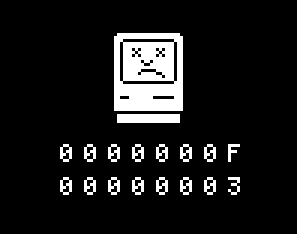
-
System 7
Color lands on the desktop. The boot face is still the black and white friend from 1984. “Welcome to Macintosh” sits in a small window. Extensions begin to tile across the bottom of the splash as the system loads.
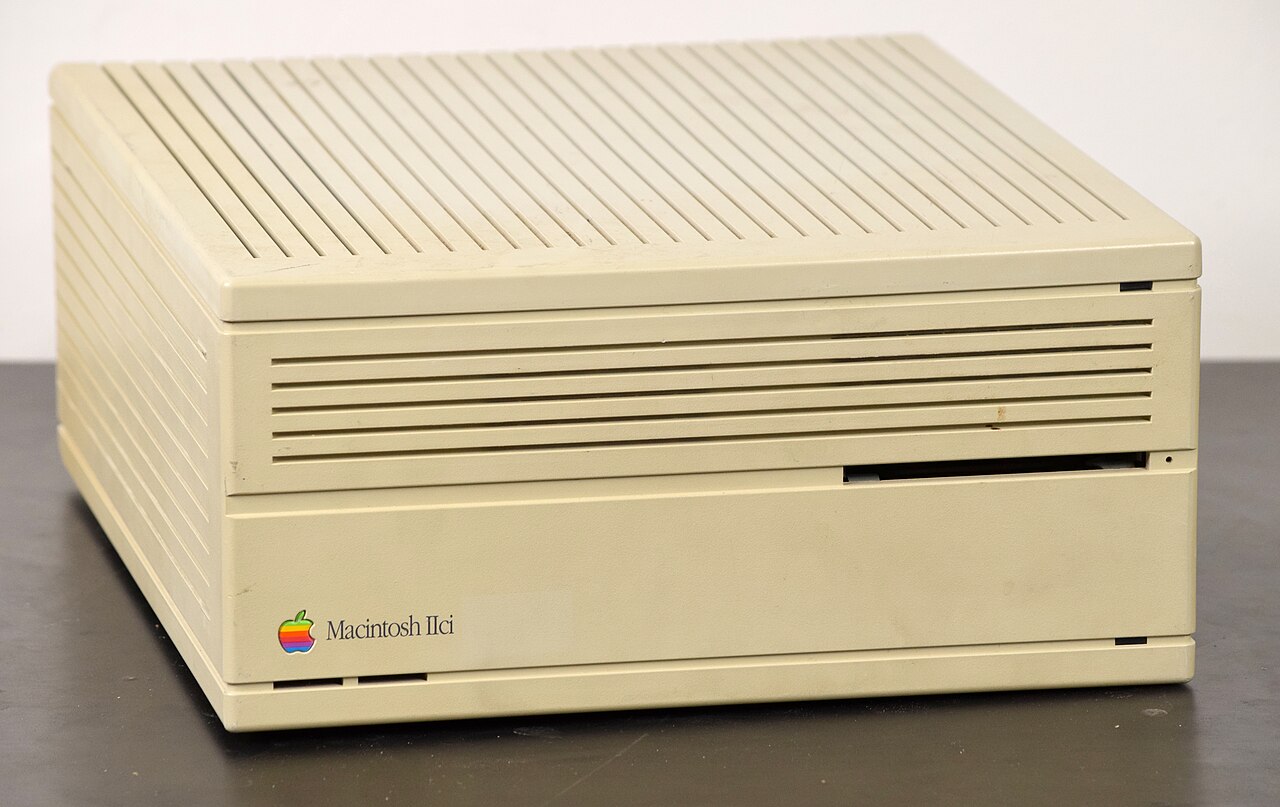
Macintosh IIci. System 7’s workhorse — color on the desktop, the same 1-bit friend on the boot. Photo: Akbkuku, CC BY 4.0. -
Eight bits of color
Lauralee Alben updates the Happy Mac and related icons into 8-bit color — a lilac screen, a warmer chassis — while the Sad Mac remains strictly black and white. The smile survives the restyle, including on the Color Classic, the compact Mac that finally got a color CRT.
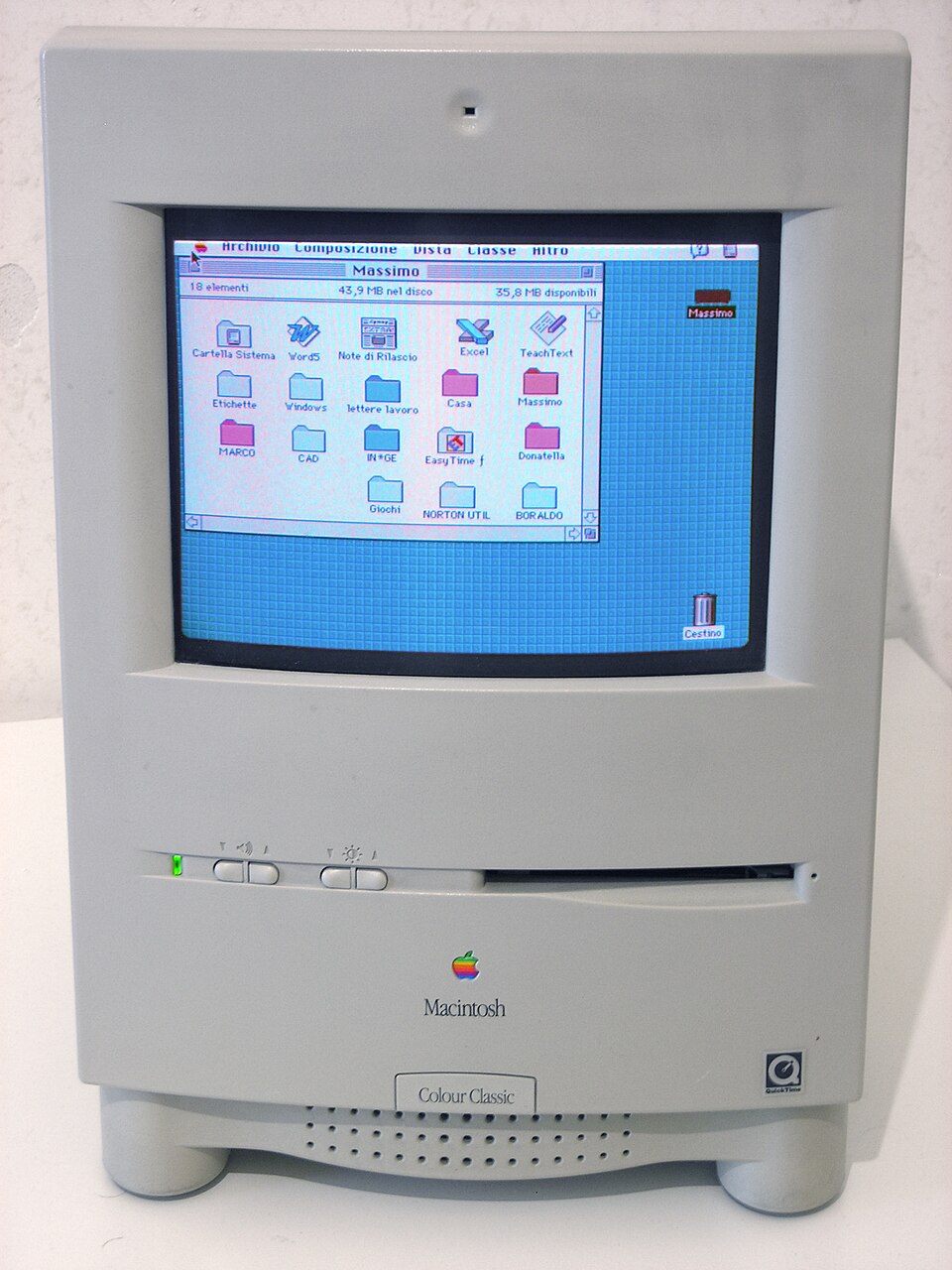
Color Classic, 1993. The compact body, now in color. Photo: Mystère Martin, CC BY-SA 3.0. -
New World ROM
The iMac G3 and its cousins move the boot loader. The face still appears when diagnostics pass. Jim Reekes’ F-sharp startup chord becomes the sound most people now mean when they say “the Mac chime.”
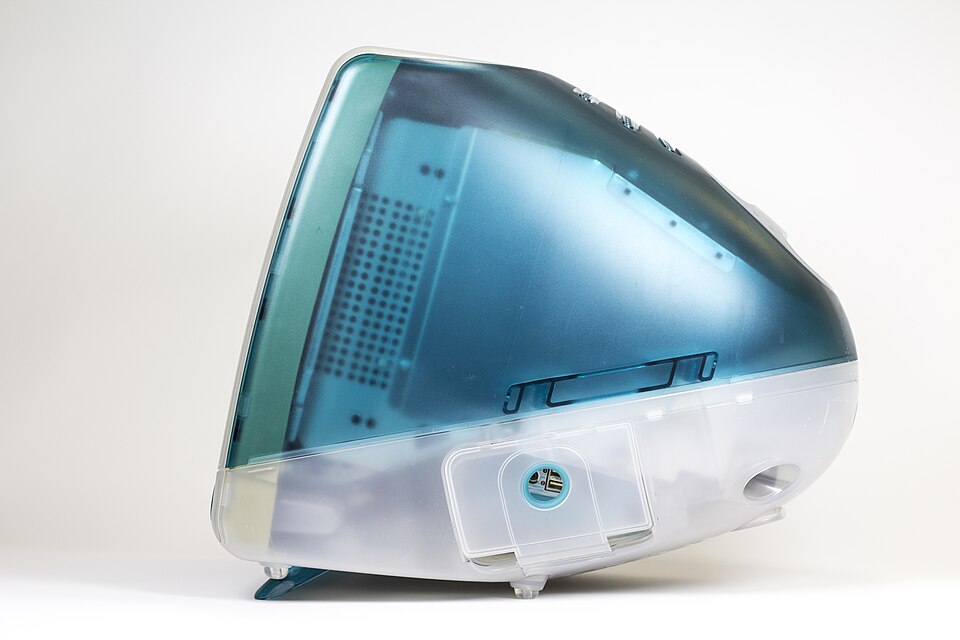
Bondi Blue iMac G3, 1998. Photo: Stephen Hackett, CC BY-SA 4.0. -
Mac OS X 10.0 and 10.1
The new operating system keeps the Happy Mac for two versions. 10.1 Puma is the last Mac OS — classic or X — that boots to that face. The color icon on this page is that last official look. After eighteen years, the grin has one year left.
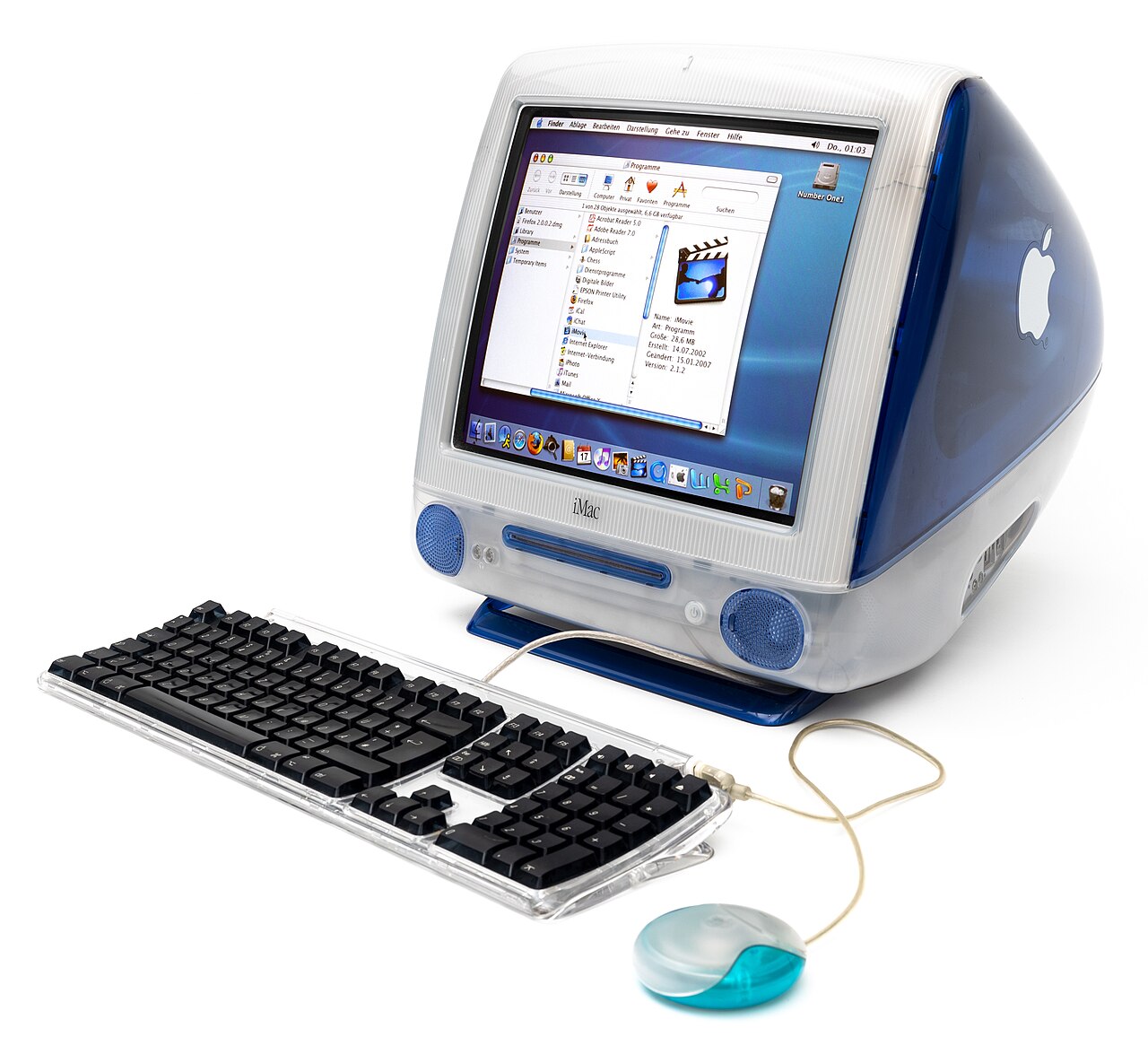
A later iMac G3 running Mac OS X — the years the Happy Mac still greeted you. Photo via Wikimedia Commons, CC BY 2.0. -
Jaguar takes the night
Mac OS X 10.2 replaces the Happy Mac with the Apple logo. Kare later said he was “carried off into the night,” and that there was not even a milk carton. The prohibitory sign joins the blinking folder as the new way a Mac says no.
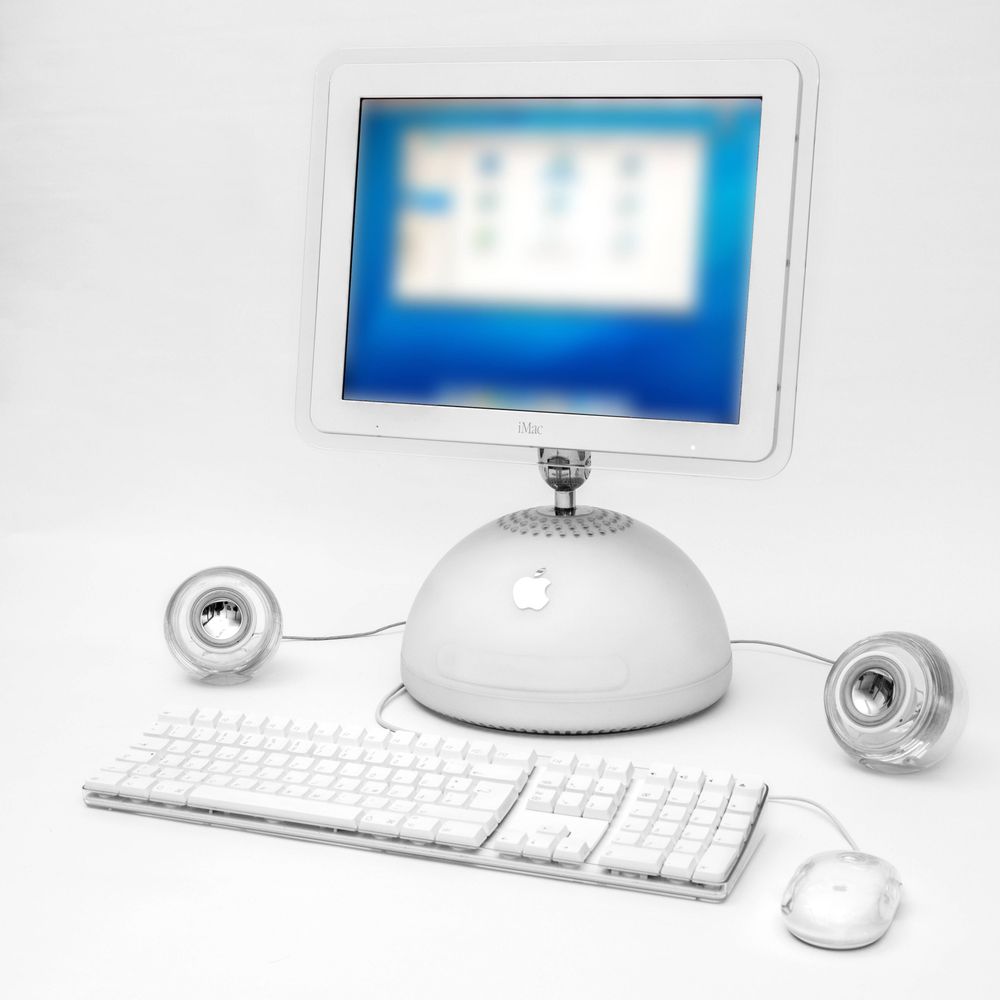
iMac G4, January 2002 — the lamp of the year the face left. Photo: Felix Winkelnkemper, CC BY 2.0. -
The smile, recast
Face ID on iPhone X borrows the Happy Mac’s composition — a rounded rectangle that is also a face. The boot icon is gone. The idea that a machine should look glad to see you is not.
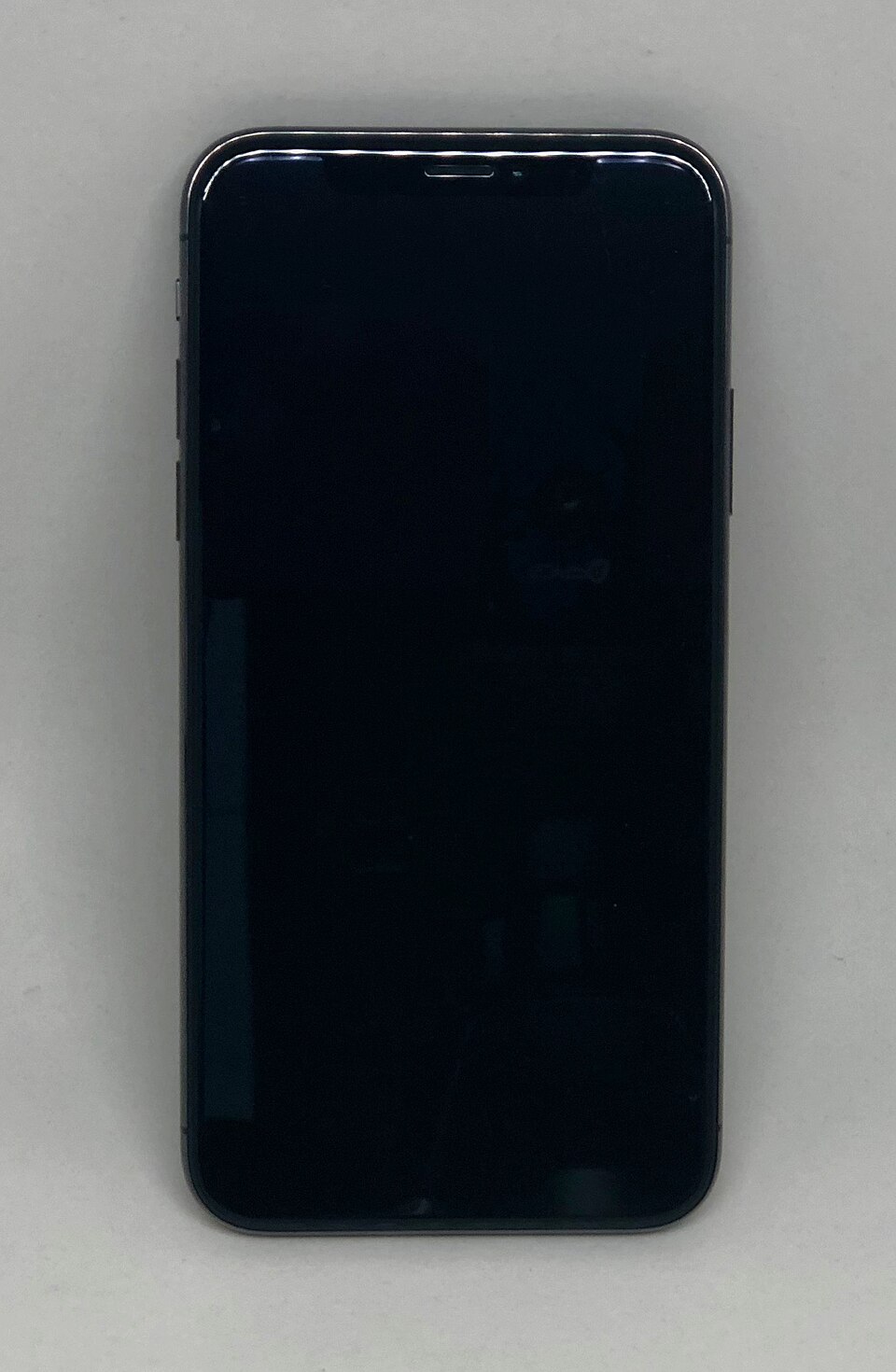
iPhone X, 2017. The notch is a face again. Photo: Gregory Varnum, CC BY-SA 4.0.
The other two
Happy. Sad. Lost.
Startup was a three-word vocabulary. Every classic Mac spoke it before the desktop existed.
-
Happy Mac
POST passed
Hardware tests succeeded. The ROM found a mind it could trust. You were allowed to go on. Last official drawing: Mac OS X 10.1.
-
Sad Mac
0F 0003
A severe fault. The hex under the frown named the piece that failed. Always 1-bit. Never given the color restyle.
-
Question floppy
No System
The computer was fine. The disk was missing. A blinking ? on a floppy — later a folder — until you fed it an operating system.
On the glass
Not a logo. A test result.
The retirement
He was carried off into the night. There isn’t even a milk carton that reads, “Have you seen this icon?”
Susan Kare, on the Happy Mac
Apple called Jaguar’s startup “fast, simple and gorgeous.” The gray logo and progress wheel were that. They were not a friend sitting on the desk. This site is the milk carton.
The pairing
HAPPYMAC
AAPL
The face beside the ticker.
The company that needed a smile to feel safe is the company people now quote as $AAPL. Happy Mac is the character from the first chapter of that story — unofficial, cultural, and still the friendliest thing Apple ever put on a boot screen.
We launch on Pons, the token launchpad on Robinhood Chain. Contract address lives below the moment it exists.
- Launch
- Pons
- Chain
- Robinhood
- Paired ticker
- $AAPL
- First boot
- 24 Jan 1984
Contract address
Soon — launching on Pons
The CA appears here the moment we launch on Pons. Not affiliated with Apple, Robinhood, or Pons. Not financial advice.